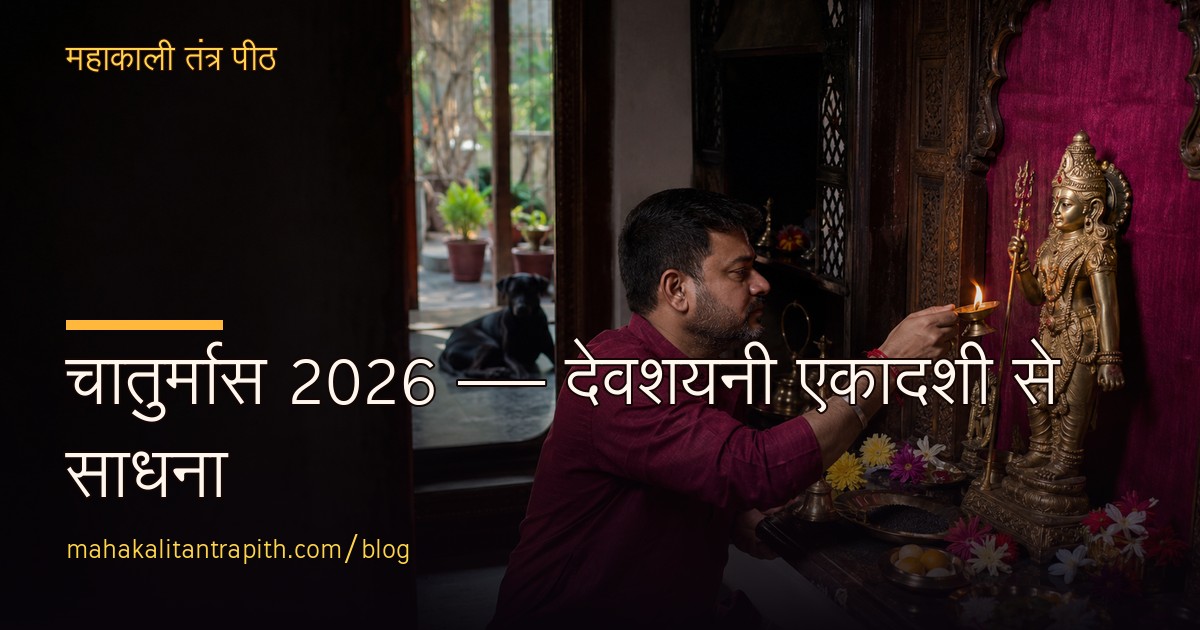
चातुर्मास 2026 — देवशयनी एकादशी से आरंभ: 4 माह की साधना का सर्वश्रेष्ठ समय
Chaturmas 2026 — Begins with Devshayani Ekadashi: The Best Four Months for Sadhana
चातुर्मास 2026 का आरंभ शनिवार, 25 जुलाई 2026 को देवशयनी एकादशी (आषाढ़ी / पद्मा एकादशी) से होता है और यह 12 नवम्बर 2026 को देवउठनी (प्रबोधिनी) एकादशी तक चलता है। मान्यता है कि इसी दिन भगवान विष्णु योग-निद्रा में शयन करते हैं, इसलिए ये चार माह विवाह-गृहप्रवेश जैसे शुभ कार्यों के लिए वर्जित पर जप, तप, दान, व्रत व साधना के लिए वर्ष का सबसे प्रबल समय माने जाते हैं। इस लेख में जानिए चातुर्मास की तिथि, महत्व, इन 4 महीनों में करने योग्य साधना व नियम, भोजन-संयम, प्रामाणिक मंत्र व सावधानियाँ।
🔱 सही विधि से साधना सीखना चाहते हैं?
गुरु अमिताचार्य जी की प्रामाणिक, step-by-step गाइडेड साधना — घर बैठे करें।
अपनी कुंडली से सटीक कारण व शास्त्रोक्त उपाय जानिए — मात्र ₹151 में अपना 1 प्रश्न पूछें।
₹151 में प्रश्न पूछें →📑 इस लेख में
- चातुर्मास 2026 — तिथि व समय
- चातुर्मास इतना विशेष क्यों?
- चातुर्मास में क्या करें — साधना व नियम
- चातुर्मास में वर्जित कार्य
- प्रामाणिक मंत्र
- देवशयनी एकादशी व्रत — सरल विधि
- आवश्यक सावधानियाँ
- प्रेरक प्रसंग — “जब बाहर वर्षा, तब भीतर साधना”
- Chaturmas 2026 — Dates & Timing
- Why Chaturmas Is So Special
- What to Do in Chaturmas — Sadhana & Niyams
- What to Avoid in Chaturmas
- Authentic Mantras
- Devshayani Ekadashi Vrat — A Simple Method
- Essential Cautions
- A Teaching Story — "When It Rains Outside, Practise Within"
चातुर्मास 2026 — तिथि व समय
दृक पंचांग (भारतीय मानक समय) के अनुसार देवशयनी एकादशी व चातुर्मास की तिथियाँ इस प्रकार हैं:
- एकादशी तिथि आरंभ: शुक्रवार, 24 जुलाई 2026 — प्रातः लगभग 09:12 बजे
- एकादशी तिथि समाप्त: शनिवार, 25 जुलाई 2026 — पूर्वाह्न लगभग 11:34 बजे
- व्रत (उदया तिथि): शनिवार, 25 जुलाई 2026 — इसी दिन देवशयनी एकादशी व्रत रखा जाएगा
- पारण (व्रत खोलना): रविवार, 26 जुलाई 2026 — प्रातः लगभग 05:48 से 08:30 बजे के मध्य
- चातुर्मास काल: 25 जुलाई 2026 → 12 नवम्बर 2026 (देवउठनी एकादशी तक)
चातुर्मास इतना विशेष क्यों?
“चातुर्मास” का अर्थ है चार मास — श्रावण, भाद्रपद, आश्विन व कार्तिक। शास्त्रों में कहा गया है कि इस काल में सृष्टि की चेतना अंतर्मुखी होती है; बाहर वर्षा-ऋतु का एकांत होता है और भीतर साधना का सुअवसर। परंपरा में देवशयनी एकादशी पर यह भाव-मंत्र बोलकर भगवान को शयन कराया जाता है:
यही कारण है कि साधु-संत इन चार महीनों में एक स्थान पर रुककर अनुष्ठान, जप व स्वाध्याय करते हैं। गृहस्थ साधक के लिए भी यह मन को साधने, संकल्प लेने व नियमित साधना आरंभ करने का श्रेष्ठतम समय है।
चातुर्मास में क्या करें — साधना व नियम
यह काल किसी भी इष्ट की उपासना — विष्णु, शिव, या आदिशक्ति काली — के अनुष्ठान के लिए अत्यंत फलदायी माना जाता है, क्योंकि इन दिनों संयम व एकाग्रता स्वाभाविक रूप से बढ़ जाती है। सरल, गृहस्थ-अनुकूल अभ्यास:
- चातुर्मास संकल्प: देवशयनी एकादशी को कोई एक नियम चार माह के लिए संकल्पपूर्वक धारण करें — जैसे नित्य एक माला जप, एक समय भोजन, मौन का एक प्रहर, या किसी वस्तु का त्याग।
- नित्य जप: रुद्राक्ष या तुलसी माला से प्रतिदिन नियत संख्या में इष्ट-मंत्र का जप करें। संख्या व समय स्थिर रखें।
- पाठ व स्वाध्याय: विष्णु सहस्रनाम, विष्णु चालीसा, गीता या अपने इष्ट-स्तोत्र का नियमित पाठ करें।
- दान व सेवा: अन्न, जल, वस्त्र या ज्ञान का यथाशक्ति दान करें; चातुर्मास में किया दान-सेवा विशेष पुण्यदायी कहा गया है।
- संयम: वाणी, आहार व व्यवहार में शुद्धता रखें; क्रोध, लोभ व आलस्य का त्याग ही असली तप है।
चातुर्मास में वर्जित कार्य
- विवाह, गृहप्रवेश, मुंडन, नववधू-प्रवेश व नए व्यापार का शुभारंभ इस काल में नहीं किए जाते — शुभ मुहूर्त देवउठनी एकादशी के बाद ही आरंभ होते हैं।
- तामसिक भोजन — प्याज, लहसुन, मांस, मदिरा व अति-तीखा — का त्याग करें।
- परंपरा में मासानुसार संयम: प्रथम मास हरी पत्तेदार सब्ज़ी, द्वितीय मास दही, तृतीय मास दूध व चतुर्थ मास दाल-द्विदल का त्याग बताया गया है (श्रद्धा व सामर्थ्य अनुसार)।
- साधना-व्रत के दौरान अनावश्यक यात्रा व प्रमाद से बचें।
प्रामाणिक मंत्र
देवशयनी एकादशी व चातुर्मास में भगवान विष्णु का यह द्वादशाक्षर मंत्र सर्वसुलभ, सुरक्षित व फलदायी है — इसे बिना दीक्षा के भी श्रद्धापूर्वक जपा जा सकता है:
लक्ष्मी-कृपा व समृद्धि हेतु:
देवशयनी एकादशी व्रत — सरल विधि
- प्रातः स्नान कर स्वच्छ (श्वेत/पीत) वस्त्र धारण करें; पूजा-स्थान शुद्ध करें।
- भगवान विष्णु के चित्र/विग्रह को पीले वस्त्र पर स्थापित कर तुलसी-दल, पीले पुष्प व धूप-दीप अर्पित करें।
- दिन भर फलाहार व्रत रखें — अन्न व द्विदल (दाल) का त्याग करें; जल-फल ग्रहण कर सकते हैं।
- ‘ॐ नमो भगवते वासुदेवाय’ का यथाशक्ति जप व विष्णु सहस्रनाम/चालीसा का पाठ करें।
- अगले दिन (द्वादशी) पारण-काल में व्रत खोलें व अन्न-जल का दान करें।
आवश्यक सावधानियाँ
- व्रत-नियम अपने स्वास्थ्य व सामर्थ्य अनुसार ही लें — रोगी, गर्भवती व वृद्धजन फलाहार/जल-व्रत तक सीमित रहें।
- संकल्प उतना ही लें जितना चार माह निभा सकें; अधूरा नियम छोड़ने से मन में ग्लानि से बेहतर है छोटा पर दृढ़ नियम।
- साधना केवल आत्म-शुद्धि, रक्षा व कल्याण के भाव से करें — किसी के अहित की भावना साधना को दूषित करती है।
- मंत्र-उच्चारण, विधि या नियम में संदेह हो तो योग्य आचार्य से मार्गदर्शन अवश्य लें।
प्रेरक प्रसंग — “जब बाहर वर्षा, तब भीतर साधना”
परंपरा में कहा जाता है कि एक साधक ने पूछा — “भगवान तो चातुर्मास में सो जाते हैं, फिर साधना किसके लिए?” गुरु मुस्कुराए और बोले — “प्रभु सोते नहीं, अंतर्मुख होते हैं। जब बाहर वर्षा का पर्दा गिरता है, तब साधक की दृष्टि भी बाहर से भीतर मुड़ती है। ये चार मास प्रभु के नहीं, तेरे भीतर जागने के हैं।” चातुर्मास का यही मर्म है — बाहरी विराम में भीतर की चेतना का जागरण।
इस चातुर्मास सही विधि से साधना आरंभ करें
यदि आप मंत्र-उच्चारण, संकल्प व नित्य-साधना की सही जानकारी चाहते हैं, तो हमारी काली साधना व Daily Protection मार्गदर्शिका चरण-दर-चरण, प्रामाणिक व सुरक्षित रूप में तैयार की गई है।
काली साधना विधि पढ़ें व्यक्तिगत विश्लेषण Sadhana AI Planner →निःशुल्क परामर्श · त्रिकाल बाबाChaturmas 2026 begins on Saturday, 25 July 2026 with Devshayani Ekadashi (Ashadhi / Padma Ekadashi) and continues until Thursday, 12 November 2026 — Dev Uthani (Prabodhini) Ekadashi. On this day Lord Vishnu is said to enter Yoga Nidra (cosmic sleep), so these four months are barred for auspicious ceremonies like weddings and housewarmings, yet they are the year's most potent window for japa, tapa, daana, vrata and sadhana. Below: the dates, significance, what to practise and observe, food restraint, authentic mantras and essential cautions.
Chaturmas 2026 — Dates & Timing
According to Drik Panchang (Indian Standard Time), Devshayani Ekadashi and Chaturmas fall as follows:
- Ekadashi tithi begins: Friday, 24 July 2026 — approx. 09:12 AM
- Ekadashi tithi ends: Saturday, 25 July 2026 — approx. 11:34 AM
- Vrat (Udaya tithi): Saturday, 25 July 2026 — the day the fast is observed
- Parana (breaking the fast): Sunday, 26 July 2026 — approx. 05:48 AM to 08:30 AM
- Chaturmas period: 25 July 2026 → 12 November 2026 (until Dev Uthani Ekadashi)
Why Chaturmas Is So Special
“Chaturmas” means the four months — Shravana, Bhadrapada, Ashwin and Kartika. The shastras describe this as a time when the consciousness of creation turns inward; outside there is the solitude of the monsoon, within there is the opportunity for sadhana. Tradition offers this bhava-mantra as the Lord is symbolically put to rest on Devshayani Ekadashi:
This is why sages stay in one place through these four months for anushthan, japa and self-study. For a householder too, it is the finest time to steady the mind, take a vow, and begin a regular practice.
What to Do in Chaturmas — Sadhana & Niyams
This period is deeply fruitful for the worship of any ishta — Vishnu, Shiva, or Adishakti Kali — because restraint and concentration rise naturally in these months. A simple, householder-friendly practice:
- Chaturmas sankalpa: on Devshayani Ekadashi, take up one discipline for four months — daily one round of japa, one meal a day, a fixed hour of silence, or giving up one indulgence.
- Daily japa: chant your ishta-mantra a fixed number of times each day on a rudraksha or tulsi mala; keep the count and timing steady.
- Recitation & study: read the Vishnu Sahasranama, Vishnu Chalisa, Gita, or your ishta-stotra regularly.
- Charity & seva: give food, water, clothing or knowledge as you can; daana in Chaturmas is said to carry special merit.
- Restraint: keep purity in speech, diet and conduct; giving up anger, greed and sloth is the real tapasya.
What to Avoid in Chaturmas
- Weddings, griha pravesh, mundan, bringing home a new bride, and starting a new business are not undertaken — auspicious muhurats resume only after Dev Uthani Ekadashi.
- Give up tamasic food — onion, garlic, meat, alcohol and very spicy food.
- Traditional month-wise restraint: 1st month avoid leafy greens, 2nd month avoid curd, 3rd month avoid milk, 4th month avoid pulses/lentils (as per faith and capacity).
- During a fast or sadhana, avoid unnecessary travel and idleness.
Authentic Mantras
For Devshayani Ekadashi and Chaturmas, Vishnu's Dvadashakshara (twelve-syllable) mantra is universally accessible, safe and fruitful — it may be chanted with devotion even without initiation:
For the grace of Lakshmi and prosperity:
Devshayani Ekadashi Vrat — A Simple Method
- Bathe in the morning, wear clean (white/yellow) clothing, and purify the puja space.
- Place an image/idol of Lord Vishnu on a yellow cloth; offer tulsi leaves, yellow flowers, incense and a lamp.
- Keep a fruit-fast through the day — avoid grains and pulses; fruit and water are permitted.
- Chant “Om Namo Bhagavate Vasudevaya” as much as you can and read the Vishnu Sahasranama/Chalisa.
- The next day (Dwadashi), break the fast in the parana window and offer food and water in charity.
Essential Cautions
- Take vows only as your health and capacity allow — the ill, pregnant and elderly should keep to a fruit or water fast.
- Vow only what you can sustain for four months; a small but firm niyam is better than an ambitious one abandoned midway.
- Practise only with the intention of self-purification, protection and welfare — any wish to harm another defiles the sadhana.
- If in doubt about pronunciation, method or rules, always seek guidance from a qualified acharya.
A Teaching Story — "When It Rains Outside, Practise Within"
Tradition tells of a seeker who asked, "If the Lord sleeps through Chaturmas, then for whom is the sadhana?" The guru smiled and said, "The Lord does not sleep — He turns inward. When the curtain of monsoon rain falls outside, the seeker's gaze too turns from without to within. These four months are not for the Lord to rest, but for you to awaken within." This is the heart of Chaturmas — an inner awakening within the outer pause.
Begin Your Sadhana Correctly This Chaturmas
If you want the correct pronunciation, the right sankalpa and a daily practice, our step-by-step Kali Sadhana and Daily Protection guides are authentic and safe.
Read the Kali Sadhana Guide Personal Analysis Free Consultation · Trikaal Baba